


For millions of Americans, a concussion doesn’t end when the headache does. Standard medical protocols focus on physical rest in the days and weeks after impact– and for good reason, that rest is essential. But for a lot of people, the checkup that clears them to go back to work, school, or sports doesn’t match how their brain actually feels: Memory lapses. Trouble finding words. A mental fog that doesn’t lift.
If that sounds familiar, you’re not imagining it, and you’re not alone.
The Gap Between “Cleared” and “Back to Normal”
A concussion is a brain injury, even when it doesn’t show up on a scan. Once the acute symptoms (headaches, dizziness, light sensitivity) resolve, standard care often shifts to a “wait and see” approach. But cognitive skills like memory, attention, and processing speed don’t always bounce back on their own timeline. For some people, that gap between medically cleared and mentally sharp again can stretch on for years.
That’s the part concussion recovery conversations don’t always cover: the skills a concussion can affect, like sustained attention, long-term memory, auditory processing, are trainable. They aren’t fixed in place.
Brain Training with LearningRx Chattanooga East
LearningRx doesn’t diagnose, treat, or cure concussions, traumatic brain injury, or any other medical condition. What our one-on-one brain training programs do is target the underlying cognitive skills, the ones a brain injury frequently leaves weaker than they were before.
That’s the science behind brain training: not reversing an injury, but giving the brain focused, one-on-one practice at the specific skills that got harder to use after it.
One Client’s Story: Ben Utecht
Former Minnesota Golden Gopher and Super Bowl champion Ben Utecht retired from football after sustaining multiple concussions over the course of his career. He completed care through Mayo Clinic and continued regular check-ins with his neurologist, but years after his last concussion, he still felt his memory and attention weren’t where they used to be.
Six years after his last concussion, Ben started one-on-one brain training at a LearningRx center and experienced exceptional results. His long-term memory score rose from the 12th percentile to the 98th percentile.* To learn more about Ben’s story, click here.
What the Average Client Has Experienced
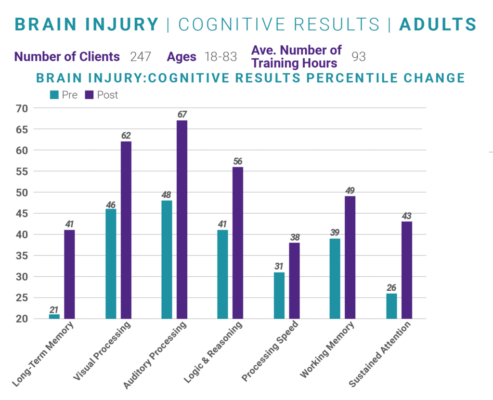
Across LearningRx’s broader research on brain injury recovery, adults with a history of concussion or TBI who completed training saw their largest average gains in long-term memory, auditory processing, and sustained attention.* Participants in these studies also reported real-life improvements in areas like mood, confidence, and day-to-day cognitive efficiency.*
How One-on-One Brain Training Works
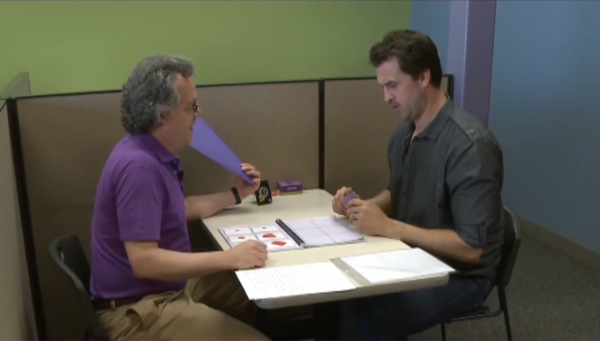
Every LearningRx client starts with a one-hour cognitive skills assessment. For someone recovering from a concussion, this measures how skills like memory, attention, and processing speed are performing right now. From there, a personal brain trainer builds a customized plan of targeted mental exercises, delivered one-on-one, either in-center or through live videoconferencing.
Unlike passive rest or generic brain-game apps, this approach pairs every client with a trainer who adjusts the intensity and focus of each session in real time– similar to working with a physical therapist after a physical injury, rather than trying to recover on your own.
Take the First Step
If it’s been months or years since your concussion and your mental sharpness still isn’t where you’d like it to be, a Cognitive Skills Assessment is the place to start. It won’t diagnose anything, but it will show you exactly which cognitive skills could use some strengthening and give you a clear, personalized plan for getting there.
Schedule your cognitive assessment by contacting Learning RX Chattanooga East today! 👉Get Started
📍Serving the Greater Chattanooga including East Brainerd, Shallowford, Ooltewah/Collegedale, Apison, Brainerd, East Ridge, Hixson, Belvoir/Germantown, and North Georgia
* Based on published research studies and past LearningRx clients. You or your loved one may or may not achieve the same results. To learn more about our research and results, visit www.learningrx.com/results.
LearningRx does not diagnose, treat, or cure concussions, traumatic brain injury, or any other medical condition. Our programs are designed to strengthen the underlying cognitive skills that a brain injury can affect.
Sources / Citations
- LearningRx. “Concussion and Brain Injury Help for Adults.” learningrx.com
- LearningRx Franchise Research Page: Cognitive Effects of ThinkRx Training for Patients with Mild TBI/ABI (fMRI case studies). learningrx-franchise.com/research
- Moore, A.L., Carpenter, D.M., Ledbetter, C., & Miller, T. (2018). Clinician-delivered cognitive training: Effects on cognition and behavior from the ThinkRx randomized controlled trial. Neuropsychiatric Disease and Treatment, 14, 1671–1683.
- LearningRx. “Ben Utecht’s Road to Overcoming Traumatic Brain Injuries.” learningrx.com/eagan
- LearningRx Research Results and Client Outcomes Report. download.learningrx.com/results-report.pdf