

In our tech-filled world, it seems like everyone’s talking about brain games — apps, puzzles, games that promise to sharpen memory, speed, attention. At LearningRx Charlottesville, we believe that brain games are fun and helpful in certain ways, but brain training goes deeper — it’s designed to remediate weaknesses, not just give you a mental warm-up. Let’s explore the difference, weigh the research behind both, and show how brain training like the programs at LearningRx offers measurable changes in how the brain can perform.
What Are Brain Games — And What Can They Do?
Brain games (think apps or games you play on your phone or computer) are usually designed to engage your mind: memorizing patterns, reacting quickly, solving puzzles, etc. They can be great tools for:
- Engagement and motivation — games are fun, competitive, or social, which helps people stick with something.
- Exercise for certain cognitive skills — games often tap into attention, reaction time, working memory, visual discrimination.
- Refreshing the brain — just like stretching before a run, they warm up mental circuits in a way you may not any other time of day.
However, research consistently shows that while brain games can help you get better at that specific game or skill, there is limited evidence that they alone cause generalized improvements in cognition — especially when someone has deficits. Improvement tends to be narrow and sometimes short-lived, and it often doesn’t transfer strongly to everyday tasks (reading, academics, work).
What Is Brain Training at LearningRx?
Let’s define what we mean by brain training in the LearningRx sense:
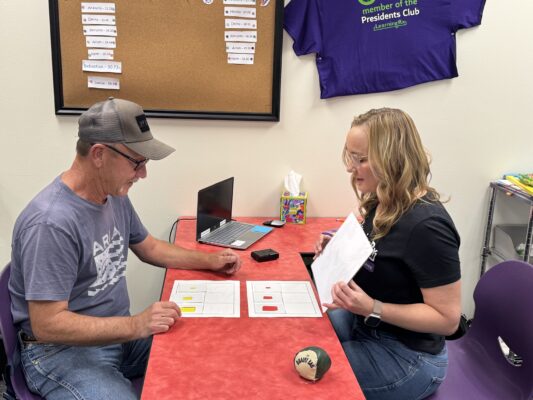
- One-on-one, personalized training with a cognitive trainer who assesses your specific weak areas and tailors the program to help you achieve your goals.
- Targeted training of multiple cognitive skills: working memory, processing speed, reasoning, visual & auditory processing, long‐term memory, attention, etc.
- Intensity, structure, and progression: tasks get sequentially harder; you get immediate trainer feedback and systematic measurement of progress over time.
- Integration of skill-building into everyday academic or life‐skills needs.
What the Research Tells Us About LearningRx Brain Training
We know “research-backed” can sound like just another buzzword—but in this case, it’s the real deal. LearningRx has more than 35 years of data and dozens of peer-reviewed studies showing that its brain training programs do more than just make people better at the exercises—they actually change the way the brain performs in daily life.
Here’s what that looks like in real numbers and real life*:
- Kids and teens have made significant changes in overall IQ after completing one-on-one brain training. That means their brains are processing information faster, remembering more, and reasoning more effectively than before.
- In one large study of students struggling to learn, kids and teens improved across every major learning skill—working memory, attention, logic, and processing speed—and those gains carried over into schoolwork and reading.
- In fact, struggling readers who completed LearningRx’s ReadRx program gained an average of more than 4 years in reading skills in just six months of training.
- Adults benefit, too. People in their 50s and older who completed brain training reported feeling more alert, confident, and able to manage everyday tasks like remembering names, driving, and staying focused at work.
The key takeaway? LearningRx brain training doesn’t just give your brain a workout—it helps rewire it for better performance in everyday life.
Why Brain Training Often Beats Brain Games — Especially When Deficits Are Present
Based on what we see in the research, here are the key reasons brain training (as done by LearningRx) leads to deeper improvements when someone has real cognitive deficits, compared to brain games:
| Feature | Brain Games | LearningRx Brain Training |
| Assessment of deficits | Usually none or superficial; game or user picks difficulty loosely. | Assessment & individualization to find weak cognitive areas & target them. |
| Personalization | Generic for many users. | One-on-one adjustment, tailored pacing & difficulty with immediate feedback. |
| Intensity & duration | Often short daily bits, inconsistent; may plateau quickly; often little to no accountability for consistency. | Higher hours, challenging tasks that are pushed just beyond current ability to foster resilience and growth; accountability & support. |
| Transfer to untrained skills / real life | Limited; often improvement only on game tasks. | Documented transfer: reading, academic performance, daily life and work tasks. |
| Trainer / human interaction | Minimal or none. | Extensive: human trainer adapts, motivates, ensures quality & accountability. |
When someone has weakness in working memory, processing speed, or attention, doing a generic brain game may help a bit by activating the brain, but often it’s not enough to make measurable changes in brain performance. Brain training does more: it works directly where the weakness is, strengthens that area so the individual can rely on it more in learning, reading, thinking, and life.
The LearningRx Charlottesville Approach: What You Get, and Why It Works
Here’s what people coming to LearningRx Charlottesville should expect—and how this approach reflects the research above:
- Initial cognitive assessment to identify strengths and weaknesses (working memory, attention, processing speed, etc.).
- Customized one-on-one training plan, using a menu of mental tasks tailored to individual needs.
- Regular measurement and adjustment, ensuring tasks are in an optimal difficulty zone (not too easy, not so hard people give up).
- Trainer support, accountability, motivation, feedback.
- Hours of training: not just quick daily game plays, but sustained sessions over weeks or months.
- Transfer focus: helping clients apply improved cognitive skills in school, work, reading, learning, daily life.
So: Brain Games Are A Great Warm-Up — But Brain Training Builds the “Muscle”
In summary:
- Brain games are not bad at all. They’re good for keeping skills fresh, challenging yourself, staying mentally active. They can be part of a healthy cognitive support plan.
- But when someone has identifiable deficits — in memory, attention, processing speed, reasoning, etc. — brain games alone usually won’t be enough to close those gaps.
- LearningRx brain training (personalized, intense, scientific, with human trainers), has strong evidence for making real change.
Take-Home Messages
🧠 If you feel like you or someone you care about struggles with learning, focus, memory, or keeping up in school/work, then don’t settle for just “brain games.”
📋 Look for evidence: peer-reviewed research, real results (not just testimonials), gains in reading/academics or daily life.
💪 Understand that improvement takes time and effort – you’ll get more benefit the more committed and consistent you are.
👏 At LearningRx Charlottesville, we’re here to guide and partner with you in that journey—to build not just sharpened skills, but stronger foundations for lifelong learning.
*Results are from studies of past clients. You or your loved ones may or may not achieve the same outcomes since every brain and situation is unique. Learn more about our research and results here!
I felt that Laura and everyone did all they could to help me be the best and do my best to grow in all areas. Laura was very encouraging, well prepared, polite, thoughtful, and always made herself available to my schedule changes! They made it easy for me to focus on the program at hand. I recommend LearningRx to anyone and everyone. They test you in many areas cognitively and find out where you are and push you to go way further than before. This program has improved my memory, ability to multitask, ability to hear people more clearly, and MOST IMPORTANTLY my ability to stay focused and attentive to the task at hand (which is something I have always struggled with)!
~Trae S., Charlottesville, VA
*Results based on past client; you or your child may or may not achieve the same results.