
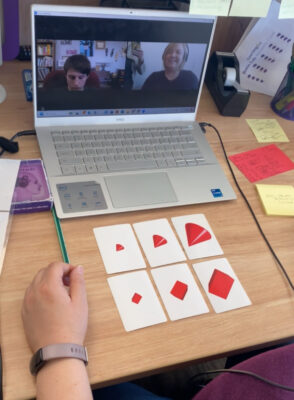

If your child seems to take just a little longer to answer questions, finish homework, or react in conversations, you may be seeing signs of slower processing speed.
Processing speed is the brain’s ability to take in information, make sense of it, and respond quickly. It plays a role in everything from reading fluency to note-taking, test performance, and even social interactions.
The good news? You can start engaging this skill at home—and have fun doing it!
Below are some of the best fast-paced games and simple DIY activities that challenge your child’s brain to think and respond more quickly.
Fast-Paced Board & Card Games That Build Processing Speed
These games work because they require quick thinking, rapid visual scanning, and fast decision-making—all key components of processing speed.
⚡ Spot It!
A family favorite for a reason. Players race to find the matching symbol between two cards.
What it builds:
- Visual processing
- Attention to detail
- Speed of recognition
Why it works: The brain has to scan, compare, and respond almost instantly.
⚡ Blink
A lightning-fast card game where players match cards by color, shape, or number.
What it builds:
- Processing speed
- Cognitive flexibility
- Visual discrimination
Why it works: There’s no downtime—your child must think and act continuously.
⚡ SET
Players race to find sets of cards based on multiple attributes.
What it builds:
Why it works: It pushes the brain to process multiple variables quickly.
⚡ Taco Cat Goat Cheese Pizza
A silly, high-energy game that combines rhythm, memory, and fast reactions.
What it builds:
- Auditory processing
- Reaction time
- Sustained attention
Why it works: Kids must quickly match what they hear with what they see and react instantly.
⚡ Uno (Speed Variations)
Add a twist by removing turn-taking rules and letting players play as fast as they can.
What it builds:
- Processing speed
- Inhibition (not playing the wrong card!)
- Quick decision-making
🚗 DIY Processing Speed Activities (No Materials Required)
You don’t need a box to build brain speed. These simple activities can be done at home, in the car, or while waiting in line.
🔤 1. Rapid Naming Challenge
Pick a category and have your child name items as quickly as possible.
Examples:
- Animals
- Foods
- Words that start with “B”
Make it harder: Set a time limit (like 10 seconds) to see how many they can name, then see if they can beat their score.
🔢 2. 1–100 Speed Count (With a Twist)
Have your child:
- Count by 1s as fast as possible
- Then try skipping numbers (2s, 5s, 10s)
- Or alternate patterns (1, A, 2, B…)
What it builds: Mental processing, cognitive flexibility, and sequencing proficiency
🧠 3. Opposites Game
Say a word and your child must quickly say the opposite.
- Hot → Cold
- Up → Down
- Fast → Slow
Level up: Increase speed or use less obvious pairs.
✋ 5. Clap-When-You-Hear-It
Give your child a target word.
- Read a sentence or list of words
- They clap every time they hear the target
What it builds: Auditory processing + reaction speed
🚦 6. Red Light, Green Light (Brain Version)
Instead of running, use thinking rules:
- Green light = say numbers in order
- Red light = stop
- Yellow light = switch to letters or reverse number counting from where they stopped
What it builds: Processing speed + cognitive flexibility
⚠️ A Quick Reality Check for Parents
These games and activities are great for practice and engagement, and they’re absolutely a great way to make brain exercise fun at home.
But if your child has a true weakness in processing speed, games alone usually aren’t enough to create lasting change.
Why?
Because real cognitive change requires:
That’s hard to replicate consistently at home with casual play.
How LearningRx Takes It Further
At LearningRx, we go beyond practice and games. We focus on measuring and strengthening the brain skills that matter most.
We start with a comprehensive assessment to pinpoint strengths and weaknesses in skills like:
- Processing speed
- Attention
- Memory
- Logic and reasoning
- Auditory & visual processing
Then we build a personalized training plan designed to actually improve those skills, not just work around them.
Want to Know if Processing Speed is Holding Your Child Back?
If you’ve noticed your child:
- Takes longer than peers to finish work
- Struggles to keep up in conversations or class
- Knows the answer but can’t get it out quickly
…it may be worth taking a closer look.
Schedule a cognitive skills assessment at LearningRx to get real answers and a clear path forward.
The instructor was Austin. He was very good-sincere, really connected with our son, diligent to keep challenging our son to go further. Overall a good experience.
~Scott K., Alpharetta, GA
*Results based on past client; you or your child may or may not achieve the same results.